Understand the risks before paying a supplier, shipping your goods or committing your money.
Importing from China can grow your business. But one wrong decision can also cost you your money or your goods.
Today, it is easy to find a supplier on Facebook, Alibaba or TikTok, negotiate the price, make payment and believe the difficult part is over. In reality, finding a supplier is often the easiest part.
The real challenge is verifying the supplier's legitimacy so that you do not lose your money. The moment you send money blindly, you lose leverage and start relying heavily on trust.
More Than 10 Years Practising China–Cameroon Trade
Our experience comes from studying China's business culture and doing business in China.
In 2016, we started a sourcing company in Yiwu. In November 2017, we upgraded to a trading company in Guangzhou. In 2020, we expanded to a foreign trade company in Douala. In 2021, we started a cargo company. Today, we are building a secure digital trade infrastructure that will help Cameroonian entrepreneurs access China's massive industrial capacity.
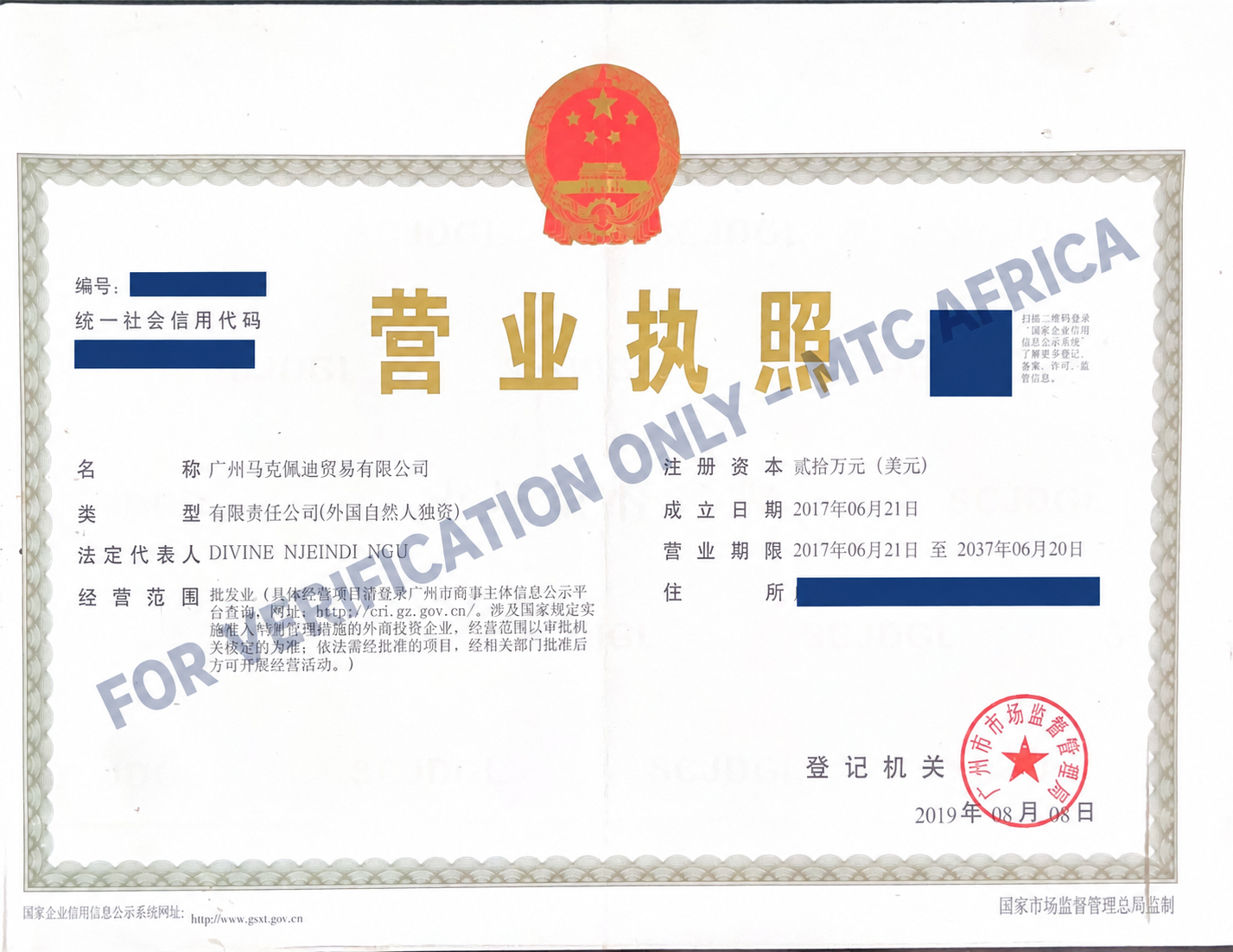
Guangzhou Markpedia Trading Co., Ltd. business licence. Sensitive registration details have been concealed for security. The original document is available for verification.
You found a supplier on Alibaba or TikTok. Then you moved to WhatsApp.
You agree on the product and price. The supplier sends a PI and payment details. You pay by bank transfer or through a Change Money Agent (Black Market), then you wait for production to start.
After sending the money, what will you do if the supplier stops replying, as has been the case with many importers?
What if the material is changed? What if production is delayed? What if the goods arrive and they are not what you ordered?
Many Cameroonians rely mainly on trust when doing business with China, and that is one reason they lose money. Chinese manufacturers protect themselves with structure:
Production does not begin until the deposit is paid.
Goods or shipping documents are not released until the balance is paid.
Yet many importers send large amounts without first verifying the supplier.
You also need a structure that protects your money, your goods and your business interests.
Before you pay
In China, Price Is Relative.
In 2018, my Chinese partner told me, “Divine, price is relative.” It took me one week to comprehend what he meant. When I called him back, he explained: “You cannot cheat a Chinese boss. He can manufacture the same product in five different qualities and you would not know the difference. At the end, you get what you pay for.”
When an importer negotiates only the price and leaves out value, the supplier may reduce the material thickness, change components, adjust the quantity or use weaker packaging. The quotation may look cheaper, but the final product can cost the importer much more.
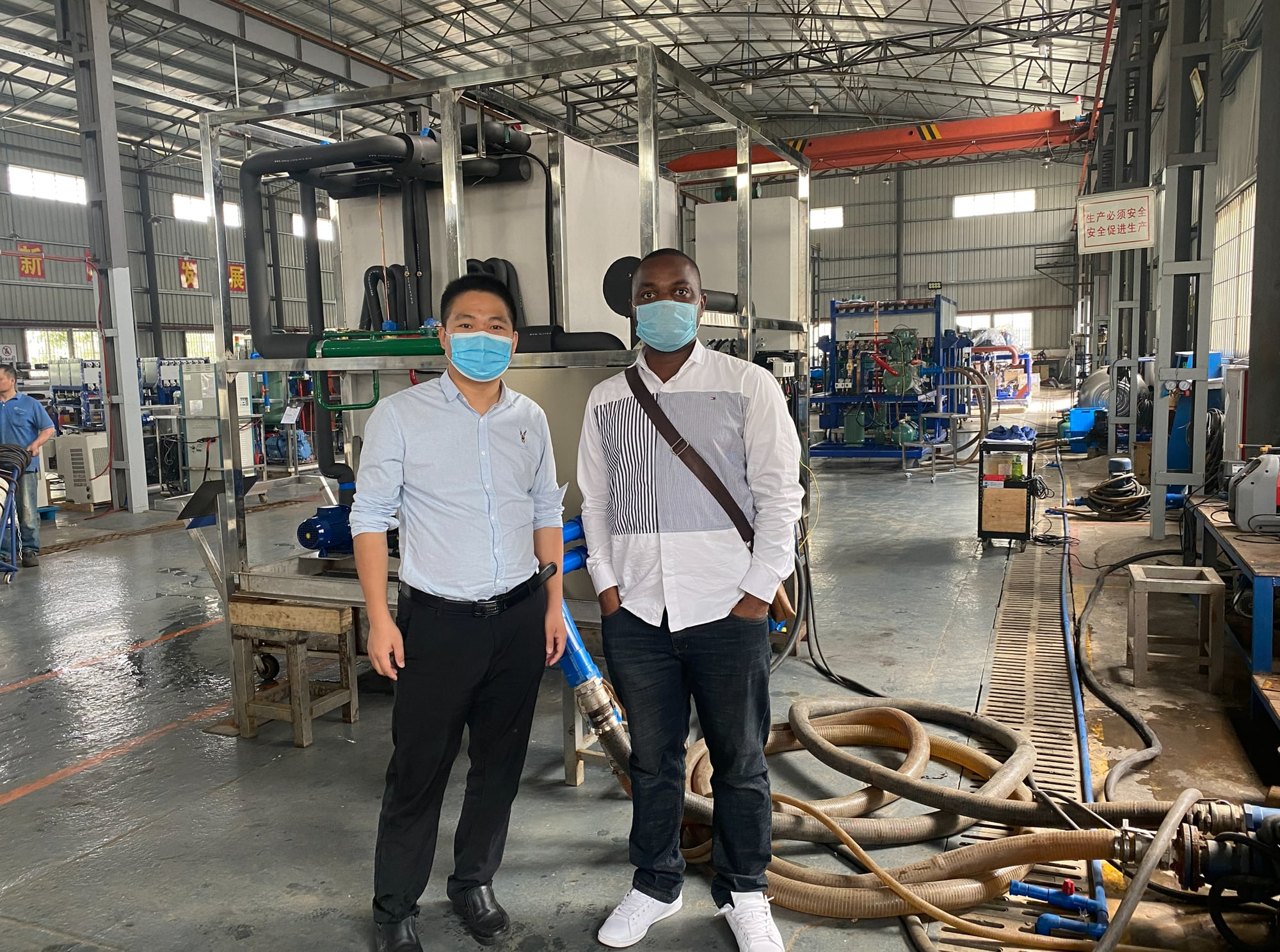
Inside a Chinese manufacturing facility, where materials, specifications and production decisions determine the final quality.
You do not need to trust the importation process blindly. You only need to understand the risks and learn how to avoid them wisely.
The next step
This is why we created the Markpedia Masterclass.
We want to help you understand the process before you pay, negotiate more effectively, protect your order and know what to do when something goes wrong.
Supplier verificationKnow who you are dealing with before you pay.
NegotiationProtect your price, quality, deadlines and interests.
Payment safetyUnderstand what to verify before sending money.
Quality controlKnow when to sample and inspect your goods.
LogisticsChoose the best partner to collect your consignment and deliver it within the best possible time.
Total costCalculate the real cost before confirming your order.
Markpedia Trade Connect
About Us
Why We Exist
Our experience in China and Cameroon, together with the experiences shared by other importers, showed us that many people lose money when importing because nobody explained the process before they paid.
You are here because you want to learn from our experience and other people's experiences, so that you can avoid costly mistakes before your next importation from China.
More importantly, you want to understand the risks involved so that you do not lose your money, receive the wrong products or fall into the hands of unreliable suppliers and logistics partners.
Perhaps you discovered us through Facebook, LinkedIn or another social media platform. Or perhaps someone directed you here.
Whichever way you arrived, you are in the right place.
Ngu Divine Njeindi, Founder of Markpedia and MTC
Helping Cameroonians secure good deals from China and avoid risky ventures has been our mission since our journey began in 2015.
It started when our founder moved to China to study the Chinese language, business culture and China’s fast-moving digital transformation. The purpose was not simply to speak Mandarin. It was to understand how China worked, how its factories operated, how its entrepreneurs negotiated and how its industrial market could create opportunities for African businesses.
In 2016, after completing our studies, we started visiting manufacturers in China directly. We visited 102 manufacturers across Yiwu, Guangzhou, Shenzhen, Wenzhou, Hangzhou, Sichuan and Shandong. We saw how products were made, how prices were determined, how specifications could be changed and how easily a foreign buyer could misunderstand what a supplier had promised.
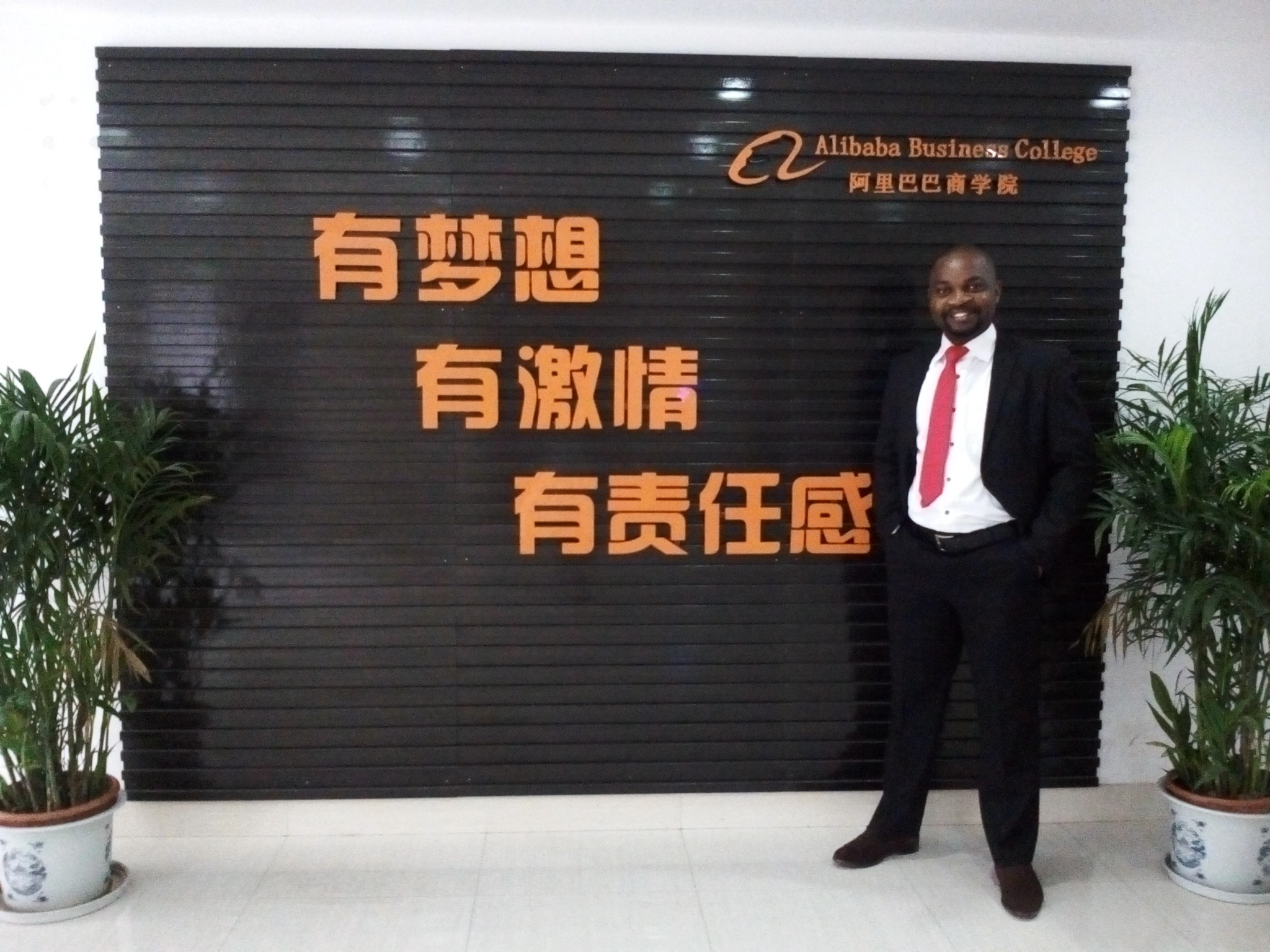
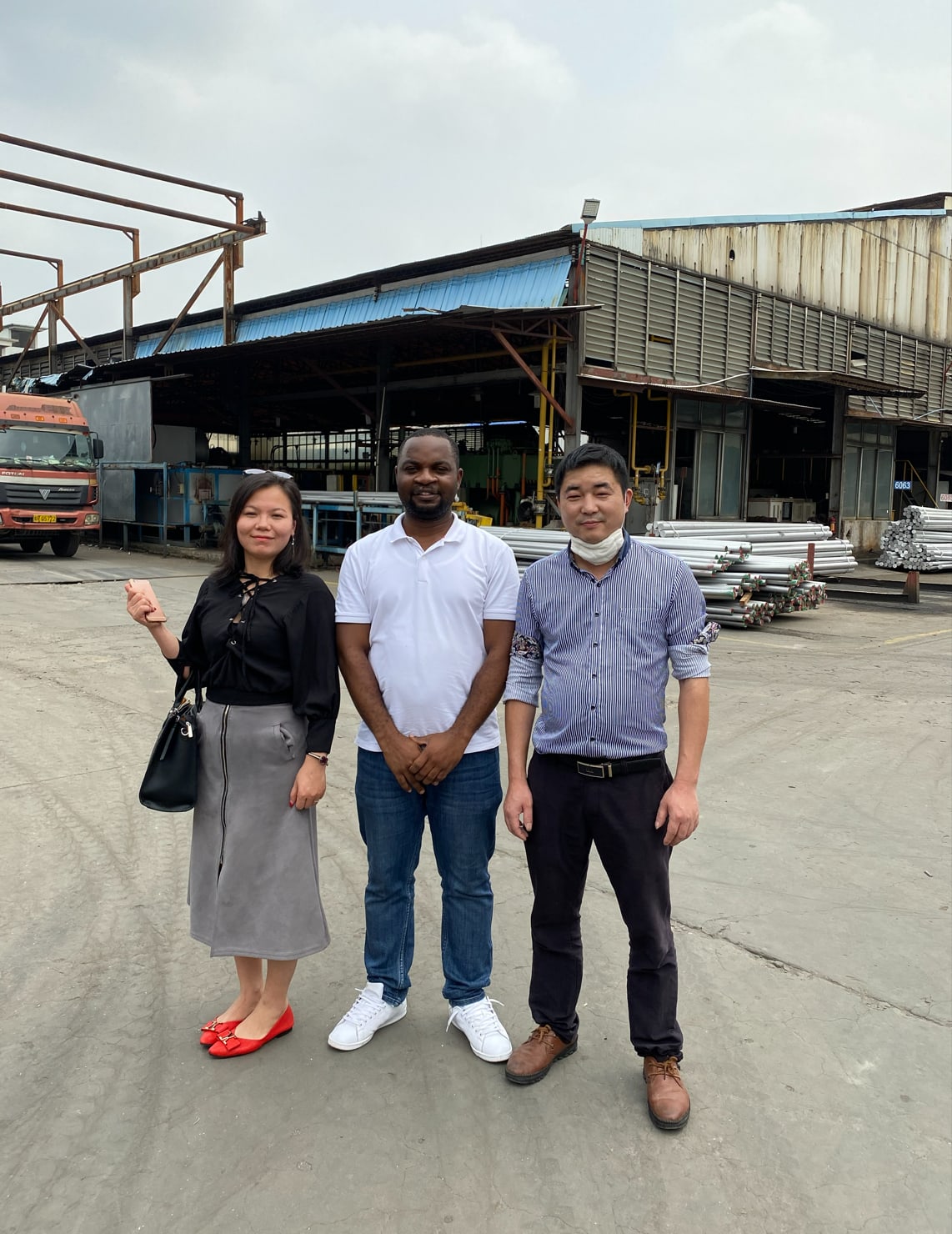
Learning how Chinese business and digital trade work from inside the market.Visiting manufacturers directly to understand production, specifications and supplier capabilities.
Read more about our journey from 2017 to Cameroon
How we went from running a small sourcing company to starting a trading company in Guangzhou
Based on everything we had learned, we started our first sourcing company in Guangzhou in 2017. The idea was simple: help Africans who wanted to benefit from China’s enormous industrial market find the right suppliers for their businesses.
The demand grew quickly. By November 2017, we established a trading company in Guangzhou so the work could become more structured and professional.
Why We Entered Cameroon
In 2020, after handling hundreds of importations, we realised that many Cameroonians were still afraid to travel to China. Some could not speak the language, others did not have time, and many saw it as a risky venture. That is why we opened Markpedia Cameroon, so Cameroonian entrepreneurs could benefit from our experience in China without travelling to China.
In 2021, we started a China–Cameroon cargo operation. Between 2021 and 2024, we shipped more than 56 containers and served over 300 companies and individual customers.
That experience placed us in the middle of the entire supply chain. We worked with Chinese suppliers, payment providers, informal exchange channels, logistics operators, groupage companies and customers in Cameroon. We saw each stakeholder’s strengths and weaknesses, and where the system repeatedly failed the importer.
From 2015 till now, we have served more than 300 B2B customers, shipped more than 56 containers and worked with more than 500 manufacturers in China.
Building the Cameroon operation around the practical challenges importers face.
2015China journey began
102Manufacturers visited
56+Containers shipped
300+Customers served
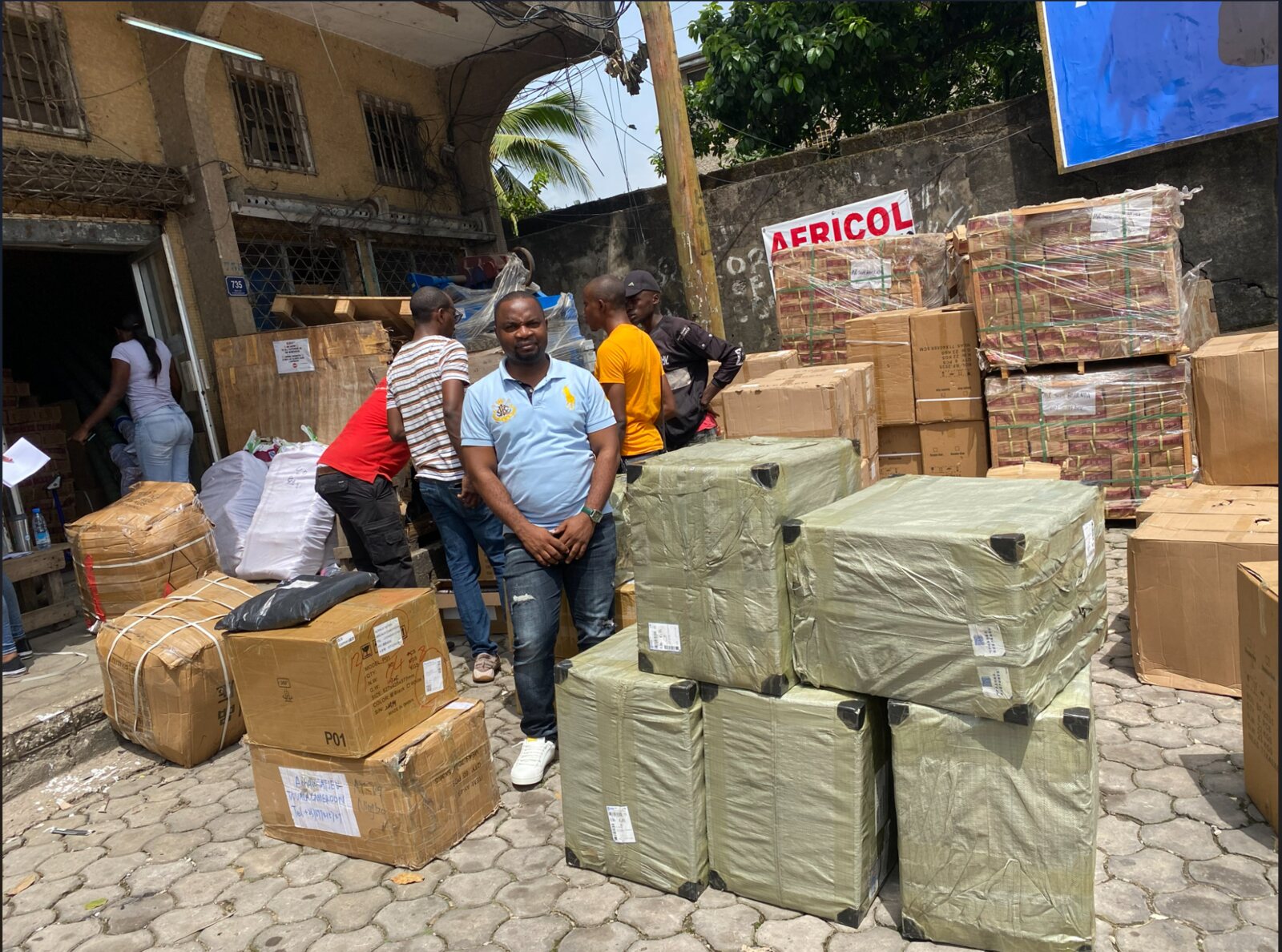
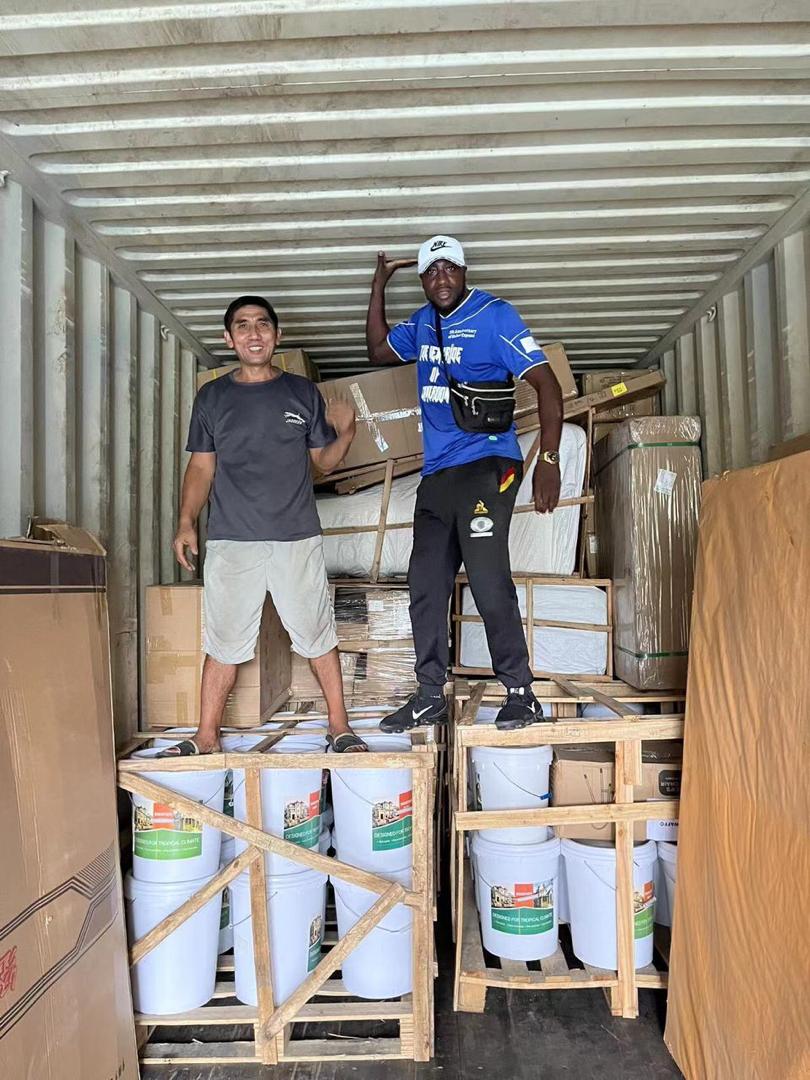
Goods delivered through our China–Cameroon trade operations.A client shipment being loaded for export from China.
As we served more Cameroonians, the same problems kept repeating.
Customers wanted direct contact with suppliers. They complained about delays and poor customer service from many cargo companies. Some lost goods because they shipped with the wrong partners.
Some customers waited three months for their goods. Others waited six months or longer. Some containers were blocked at the port while customers received little information and did not know what to do next.
We have met customers who paid for one product and received something completely different. Others sent money but never received their goods. We have also met people who wanted to start importing but remained afraid because they did not understand the process or know which partners to trust.
Importation creates massive economic opportunities. But when it is done poorly, it can lead to massive losses and frustration.
If they understood the process, many of their decisions would have been different.
Let us give you a simple example, one you may already recognise.
A familiar situation
You found the supplier on Alibaba. What happened next?
Thousands of Cameroonians, both at home and abroad, go to Alibaba and begin discussing with Chinese suppliers. They exchange WhatsApp numbers, move the conversation away from the platform, close the deal privately and send payment through a bank transfer or an informal currency-exchange channel.
Find the supplier on Alibaba
Move the conversation to WhatsApp
Agree privately and send the money
Wait and hope everything happens as promised
But after you send the money, what leverage do you still have?
What happens if the supplier stops responding? What happens if the material is changed, production is delayed or the final goods are not what you approved?
What evidence do you have? What protection does the payment method provide? Who is responsible when something goes wrong?
Business should not depend only on trust. It should be supported by structure, verification, documentation and control.
Finding a supplier is usually the easy part.
The real challenge is controlling everything that happens after you find one.
Before you buy, you need to know how to verify the company behind the quotation and confirm that the payment beneficiary is connected to that company. You need specifications that clearly describe the materials, dimensions, performance and packaging you expect.
You need to understand when to use a sample, when to inspect, how to preserve evidence and how to maintain leverage after making a payment. You also need to calculate the full landed cost, not simply the price written on the supplier’s quotation.
Supplier verification: Who exactly are you dealing with?
Product specifications: Is what you expect written and measurable?
Payment structure: What protection and leverage remain after payment?
Quality control: Who will confirm the goods before shipment?
Landed cost: What will the product truly cost when it reaches you?
Logistics: Is the partner appropriate for your goods and route?
A good-looking deal can become an expensive mistake when these questions are answered too late.
Understanding the process changes the decision.
The purpose of this guide is not to make importing from China appear frightening. It is to help you see that most risks become easier to manage when they are identified early.
When you know what to verify, what to document, when to inspect and how to structure payment, you stop depending only on promises. You begin making decisions based on evidence and control.
You may still face delays or disagreements, international trade will always contain uncertainty. But you will be better prepared to prevent avoidable mistakes and respond properly when problems arise.
The safest importer is not the person who trusts nobody. It is the person who understands the process and knows where trust must be supported by proof.
Continue learning
Before your next payment, slow down and ask better questions.
Your next import decision should begin with verification, not with excitement over a low price.
Three questions to ask before paying a supplier
1. Who is receiving the money? Confirm that the beneficiary belongs to, or is properly connected with, the company you verified.
2. What exactly has the supplier agreed to deliver? Your specifications, materials, measurements, packaging and acceptance conditions should be written and measurable.
3. What happens if the supplier does not deliver as agreed? Understand what evidence, payment protection, inspection process and dispute options you will have.
The central lesson
You do not need to fear importing from China.
You need to understand the process, recognise the risks and know how to protect your interests.
Ready to learn?
Apply for the next MTC Masterclass.
You have seen why we teach this. Now bring your real project, supplier quotation or importation challenge and learn what to do next.
PARTICIPATION POLICY
A clear application and payment process.
Please read these terms before making payment. They explain reservations, refunds, transfers and cancellations.
Seat reservationThe 25,000 XAF payment reserves your Early Bird seat while your application is reviewed. The standard fee is 30,000 XAF.
Application not acceptedIf your application is not accepted, the amount paid is fully refunded through the original payment channel, with no deduction by MTC, within 5 to 10 working days.
Cancellation policyIf you request a cancellation 7 or more days before the event, you will receive a full refund. Within 72 hours of the event, we are sorry, but the fee is neither refundable nor transferable.
Cancellation or rescheduling by MTCIf MTC cancels or reschedules the session, you may choose between a full refund and transferring your place to a new date.
MTC Masterclass
Masterclass
4 Hours of Practical Lessons on How to Import from China
This Masterclass is prepared to help Cameroonian importers identify the risks involved when doing business with Chinese suppliers and learn how to avoid them.
DateSaturday, 31 October 2026
Time10:00 AM to 2:00 PM
VenueHôtel La Falaise, Bonanjo, Douala
CapacityOnly 50 participants
Early Bird25,000 XAF until 28 October at 10:00 AM
Standard Fee30,000 XAF · Pay at the door
What you will get
4 hours of practical insight on how to do business with China
Free consultation to discuss your project or importation challenge
Import Guide manual to guide you throughout the importation process
Networking with other professionals
Learning from other people's experiences
Buffet at Hôtel La Falaise, Bonanjo
What you will learn
Verify the company behind a quotation before paying
Negotiate price and value at the same time with Chinese suppliers
Define materials, specifications, quantity, packaging and deadlines
Choose safer payment structures
Decide when to request samples and inspections
Calculate the real landed cost
Select the right logistics partner
Manage customs and common import risks
Resolve disputes
Handle after-sales service and follow-up
PARTICIPATION POLICY
A clear application and payment process.
Please read these terms before making payment. They explain reservations, refunds, transfers and cancellations.
Seat reservationThe 25,000 XAF payment reserves your Early Bird seat while your application is reviewed. The standard fee is 30,000 XAF.
Application not acceptedIf your application is not accepted, the amount paid is fully refunded through the original payment channel, with no deduction by MTC, within 5 to 10 working days.
Cancellation policyIf you request a cancellation 7 or more days before the event, you will receive a full refund. Within 72 hours of the event, we are sorry, but the fee is neither refundable nor transferable.
Cancellation or rescheduling by MTCIf MTC cancels or reschedules the session, you may choose between a full refund and transferring your place to a new date.
QUESTION 1 OF 6
Where are you today?
ATTEND THE NEXT MTC MASTERCLASS
Next Session and Attendance
MTC MASTERCLASS
4 Hours of Practical Lessons on How to Import from China
Saturday, 31 October 202610:00 AM to 2:00 PM
Practical cross-border trade learning, real cases, participant questions and direct discussion.
Standard fee (paid at the door)30,000 XAF
Early Bird price25,000 XAF
Only 50 seats. Your payment reserves your Early Bird seat while your application is reviewed. If your application is not accepted, the amount paid is refunded to you in full.
Read the participation and refund policy
Your payment reserves your seat. If your application is not accepted, you receive a full refund within 5 to 10 working days. Cancellation: 7+ days = full refund; under 7 days until 72 hours = one transfer; within 72 hours or non-attendance = no refund or transfer.
✓
APPLICATION RECEIVED
Thank you for applying to the MTC Masterclass.
Your application for the next MTC Masterclass has been received. Here are the next steps before the event.
Reference—
DateSaturday, 31 October 2026
Time10:00 AM to 2:00 PM
StatusApplication under review
If your application is not accepted, the amount paid is refunded to you in full.
Keep your reference safe. MTC will contact you on .
NEXT STEPS
From application to the Masterclass.
1
Application sentYou have completed your application and payment.
2
Application reviewThe MTC team reviews your profile, objectives and the questions you want addressed.
3
ConfirmationIf your application is accepted, you receive your attendance confirmation and the practical event details.
4
Preparation before the eventNote the questions, transactions, ideas or business difficulties you want to discuss.
5
Attend the MTC MasterclassArrive ready to take part, ask questions, learn from real cases and leave with clear actions.
BEFORE YOU ATTEND
Come prepared.
01Bring your questions
Write down the precise business questions you want answered.
02Bring your real situation
If you are dealing with a supplier, payment, shipping or trade problem, bring the details.
03Bring your idea
If you are planning an import, business or opportunity, be ready to explain it clearly.
04Bring useful documents
Where appropriate, bring quotations, specifications or non-sensitive transaction information that helps explain your question.
05Arrive on time
The Masterclass starts at 10:00 AM. Arrive early enough to register and settle in.
06Come ready to take part
This is a practical discussion, not a passive lecture. Ask, challenge, learn and take notes.
Ask MTC
What would you like help understanding?
Select the closest option and continue to WhatsApp.